
Social Realism emerged in the early twentieth century as artists turned away from abstraction and academic idealism toward the lived experience of working people – labourers, farmers, the unemployed, the dispossessed. While the movement found expression in painting and sculpture, printmaking became its most democratic and ideologically charged medium. A print, unlike a unique canvas, could be produced in multiples, sold cheaply, distributed through union halls, left-wing periodicals, and political pamphlets. The medium itself embodied the movement’s egalitarian politics: art for the many, not the few.
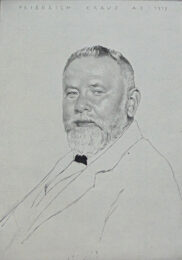
The roots trace back to Honoré Daumier’s lithographic caricatures of French bourgeois hypocrisy and to Käthe Kollwitz, whose harrowing etchings and woodcuts of German poverty, war, and maternal grief gave printmaking an emotional and moral weight that painting struggled to match. Kollwitz’s stark black-and-white contrasts, her thick expressive lines, and her refusal of decorative prettiness became a visual grammar that Social Realists across the world would inherit.
In Mexico, the Taller de Gráfica Popular (People’s Graphic Art Workshop), founded in 1937, became the movement’s great collective engine. Artists like Leopoldo Méndez, Pablo O’Higgins, and later contributors built on the legacy of José Guadalupe Posada, whose calaveras (skeleton) prints had already fused folk imagery with biting social satire. The TGP produced linocuts and woodcuts addressing land reform, fascism, and labor rights, distributing them as broadsides meant to be pasted on walls, not framed in galleries.
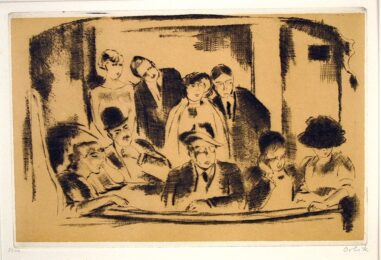
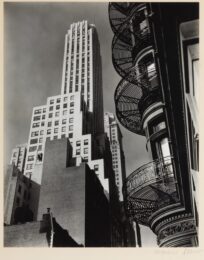
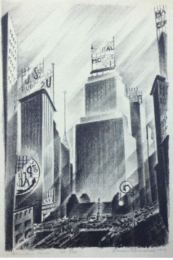
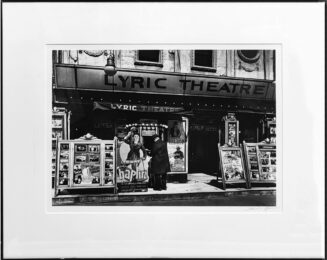
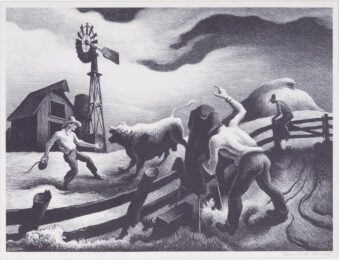
In the United States, the Great Depression and the Works Progress Administration’s Federal Art Project gave printmaking institutional support. Artists such as Ben Shahn, Rockwell Kent, and Raphael Soyer produced lithographs and etchings depicting breadlines, factory workers, and tenement life. The graphic directness of prints suited the era’s documentary impulse – closely aligned with photography’s own turn toward social reportage in the work of Dorothea Lange and Walker Evans. Printmaking guilds and workshops, including the American Artists’ Congress, explicitly linked artistic production to labor organising, treating the print as both artwork and political tool.
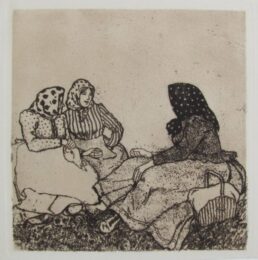
Technically, Social Realist printmakers favoured woodcut and linocut for their bluntness- the gouged, resistant marks of the block mirrored the hardship of their subjects – while lithography offered tonal subtlety suited to psychological interiority. Etching allowed for the fine, agitated line work seen in Kollwitz and her successors. Few Social Realists embraced silkscreen, which was still emerging as a fine art medium, though it would later become central to political printmaking’s next generation.
What unites these disparate practices is a conviction that art’s purpose was witness and advocacy. The print’s reproducibility wasn’t a limitation to be overcome but the whole point: images of suffering and resistance needed to circulate, to be affordable, to hang in a union office as readily as a museum. In choosing the print over the singular masterpiece, Social Realist artists made a quiet but radical argument about who art was for- an argument that still echoes in protest posters and community printshops today.