Picture a workshop in Augsburg, Germany, somewhere around the year 1500. The air smells of hot metal and acid fumes. A craftsman leans over a steel breastplate, carefully painting a design onto its surface with a greasy, acid-resistant varnish before dunking it into a corrosive bath. He isn’t making art. He’s decorating armor for a knight who wants to look magnificent on the battlefield.
That craftsman’s name was Daniel Hopfer – and without quite meaning to, he was about to hand the art world one of its most beloved printmaking techniques.
Art history loves a clean origin story: a lone genius, a flash of inspiration, a masterpiece unveiled. The real story of etching is messier and, honestly, more interesting. It’s a story about a craft borrowed from war, repurposed by accident, perfected by rivals, and eventually turned into one of the most expressive tools an artist can hold. So let’s go back to the beginning – to acid, iron, and a man most people have never heard of.
Wait, Etching Started on Armor?
Yes. Long before etching ever touched a sheet of paper, it lived in the workshops of armorers and metalworkers. The technique was originally developed in the Middle East for decorating armor. Craftsmen had figured out that acid could bite delicate, flowing lines into metal far more easily than a hand-carved engraving tool ever could – perfect for the swirling ornamental patterns nobles wanted on their breastplates and shields.
This kind of metal etching with acid was known in Europe from at least 1400, but for a century it stayed firmly in the realm of decorative metalwork. Nobody had yet thought to use it to make a picture on paper. That leap needed a specific kind of person: someone who worked with metal every day, understood acid and line, and also had an eye for image-making.
Think about what printmaking looked like before this moment. Woodcut had been around for generations – a relief method where the artist carves away everything except the raised lines that will hold ink, the same basic logic as a rubber stamp. It was sturdy and cheap, but bold and blunt; fine detail was a fight against the wood grain. Engraving, the other major technique, went the opposite direction: an artist gouged lines directly into a copper plate with a tool called a burin, which allowed for exquisite precision but demanded serious physical strength and years of training just to push metal out of metal in a controlled way. Both methods required real muscle and real patience.
Etching offered something neither could: speed of hand. Instead of forcing a line into metal, the artist could simply draw – the same loose, fluid motion as sketching with a pen – into a soft coating on the plate, and let the acid do the hard labor of biting the line into the surface underneath. That single shift, from carving to drawing, is the quiet revolution hiding inside Hopfer’s workshop experiment.
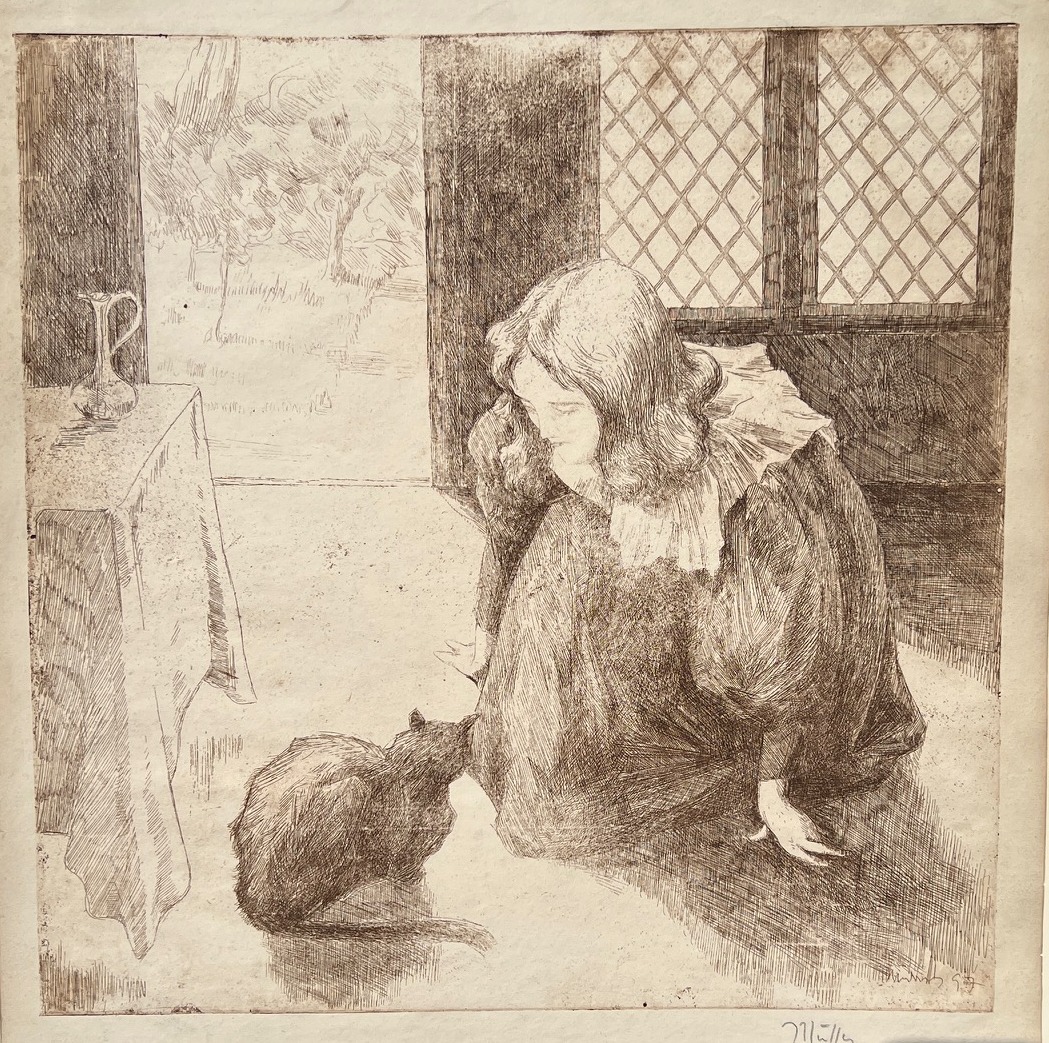
La petite fille au chat (1897)
Alfredo Muller Jan Johnson Old Master Modern Prints
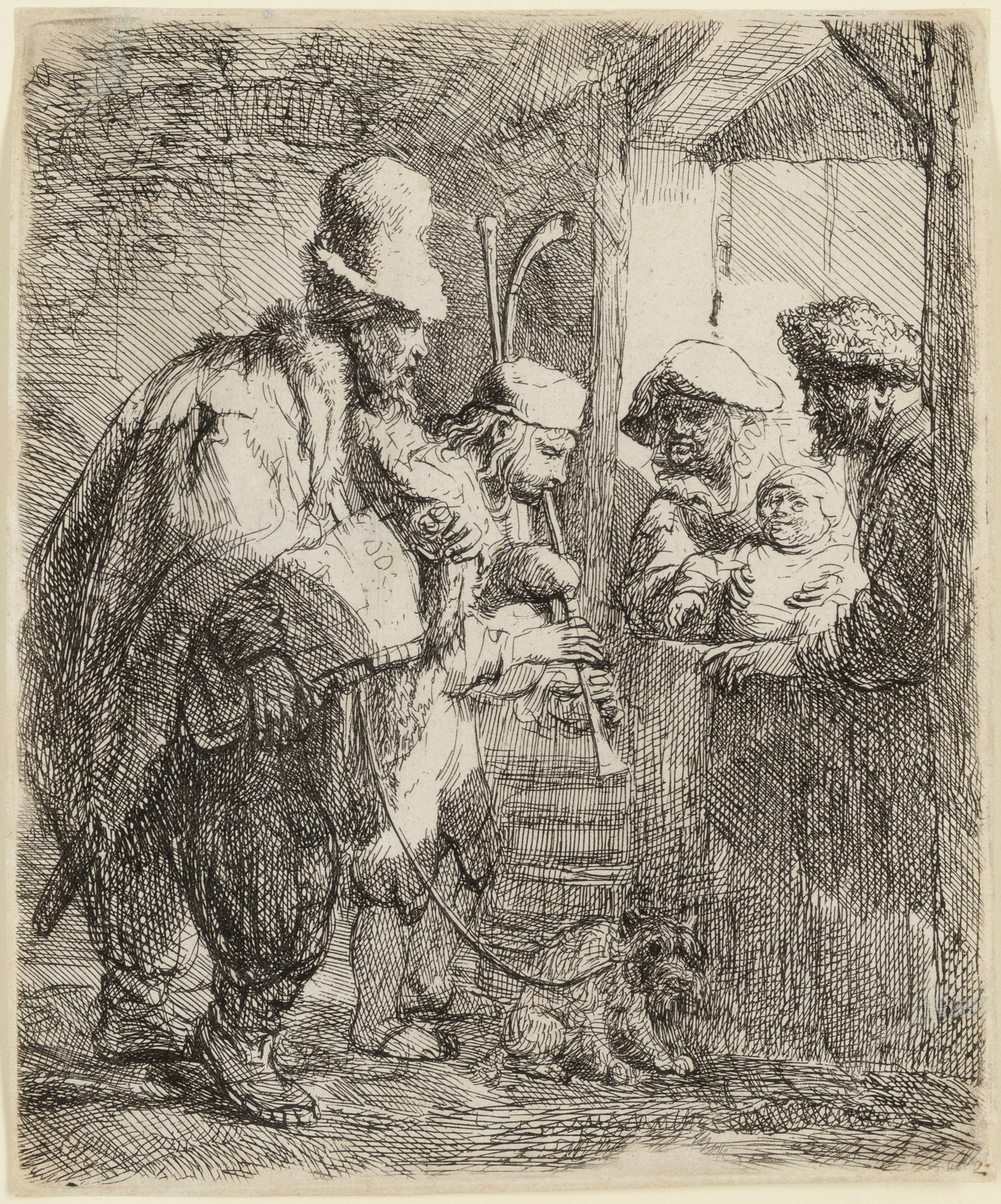
The Strolling Musicians (1635)
Harmensz van Rijn Rembrandt Christopher-Clark Fine Art
Enter Daniel Hopfer, the Reluctant Revolutionary
Daniel Hopfer, born around 1470 in Kaufbeuren and later a citizen of Augsburg, is widely believed to have been the first artist to use etching in printmaking. He wasn’t a painter dabbling in a side hobby – he was trained as an etcher of armour, the family trade. Somewhere around the turn of the sixteenth century, Hopfer had the idea that would change printmaking forever: what if, instead of decorating a breastplate, you etched a design onto a flat iron plate purely to print it on paper?
Historians consider him the first artist to adapt etching from the iron trades to printmaking, probably around 1500, and crucially, he was the first artist to truly specialize in the technique, rather than just experiment with it once and move on.
The Plot Twist: He Used the “Wrong” Metal
If you’ve ever taken a printmaking class, you know etchings are made on copper. Hopfer didn’t use copper – he used iron, because that’s what he already had lying around the armor workshop. Unlike most later prints, which were etched on copper, Hopfer’s prints continued to use the iron plates he was accustomed to working with from his training in steel armor.
The problem? Iron rusts. Damage to plates and prints caused by rusting was only overcome later by a move to copper, led by the Dutch master printmaker Lucas van Leyden, once a gentler acid mixture (mordant) had been developed. So the medium’s founding father was, in a sense, using inferior materials – a happy accident that later artists quietly corrected.
He Wasn’t Alone for Long — But He Was First
Hopfer didn’t work in a vacuum forever. Word of this strange new technique spread fast among German and Italian artists hungry for new tools. Even Albrecht Dürer himself tried etching, and the earliest surviving dated etchings are actually three works by Dürer from 1515. But don’t let that fool you into thinking Dürer got there first – stylistic evidence suggests Hopfer had been using the technique as early as 1500, he simply didn’t date his work. Dürer just happened to be tidier with his paperwork.
Etching essentially meant drawing directly on the surface of a metal plate, and that ease opened the door for all kinds of artists to make prints – including, later, giants like Parmigianino and Pieter Bruegel the Elder.
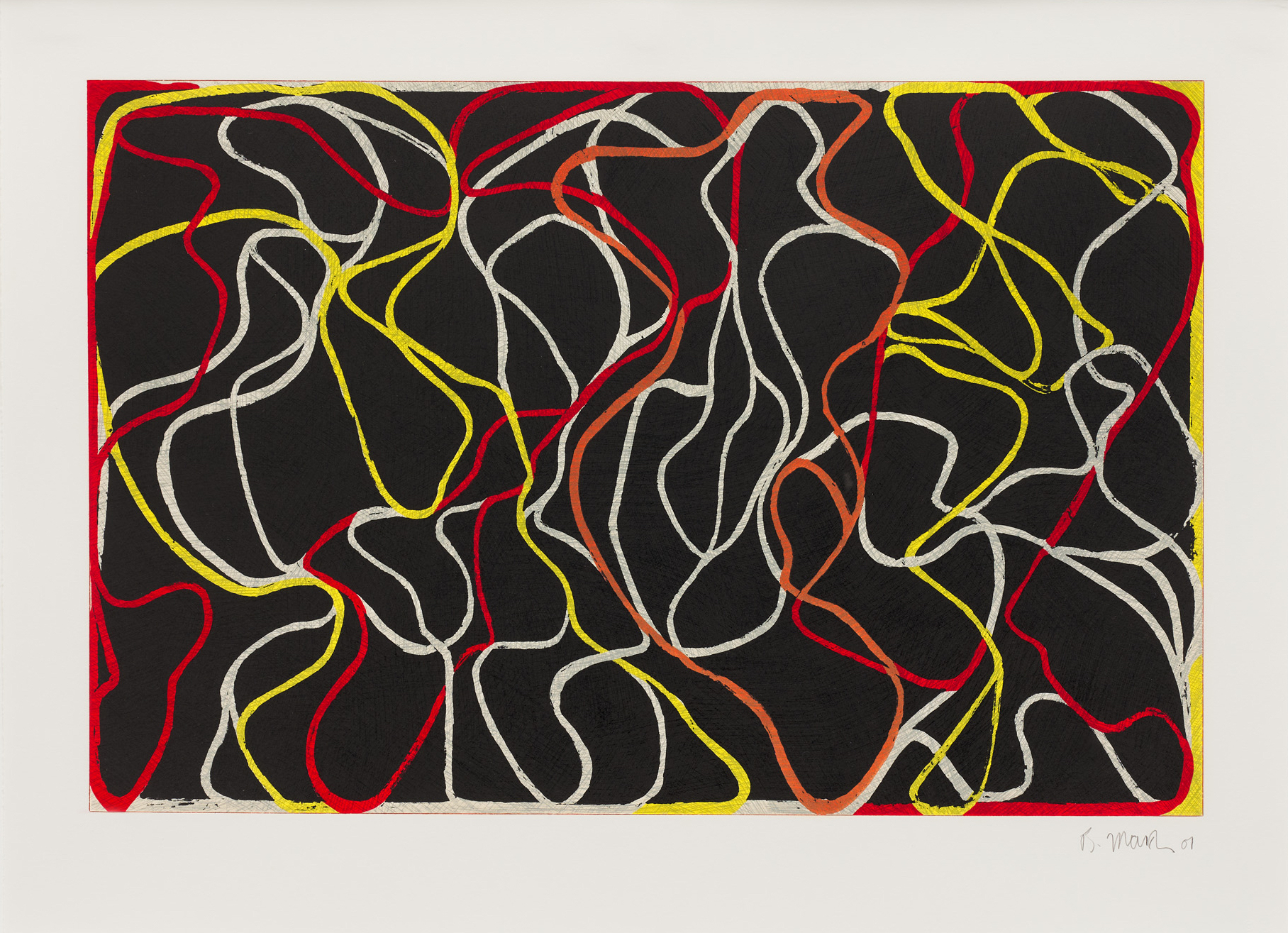
Beyond Eagles Mere (2001)
Brice Marden Susan Sheehan Gallery
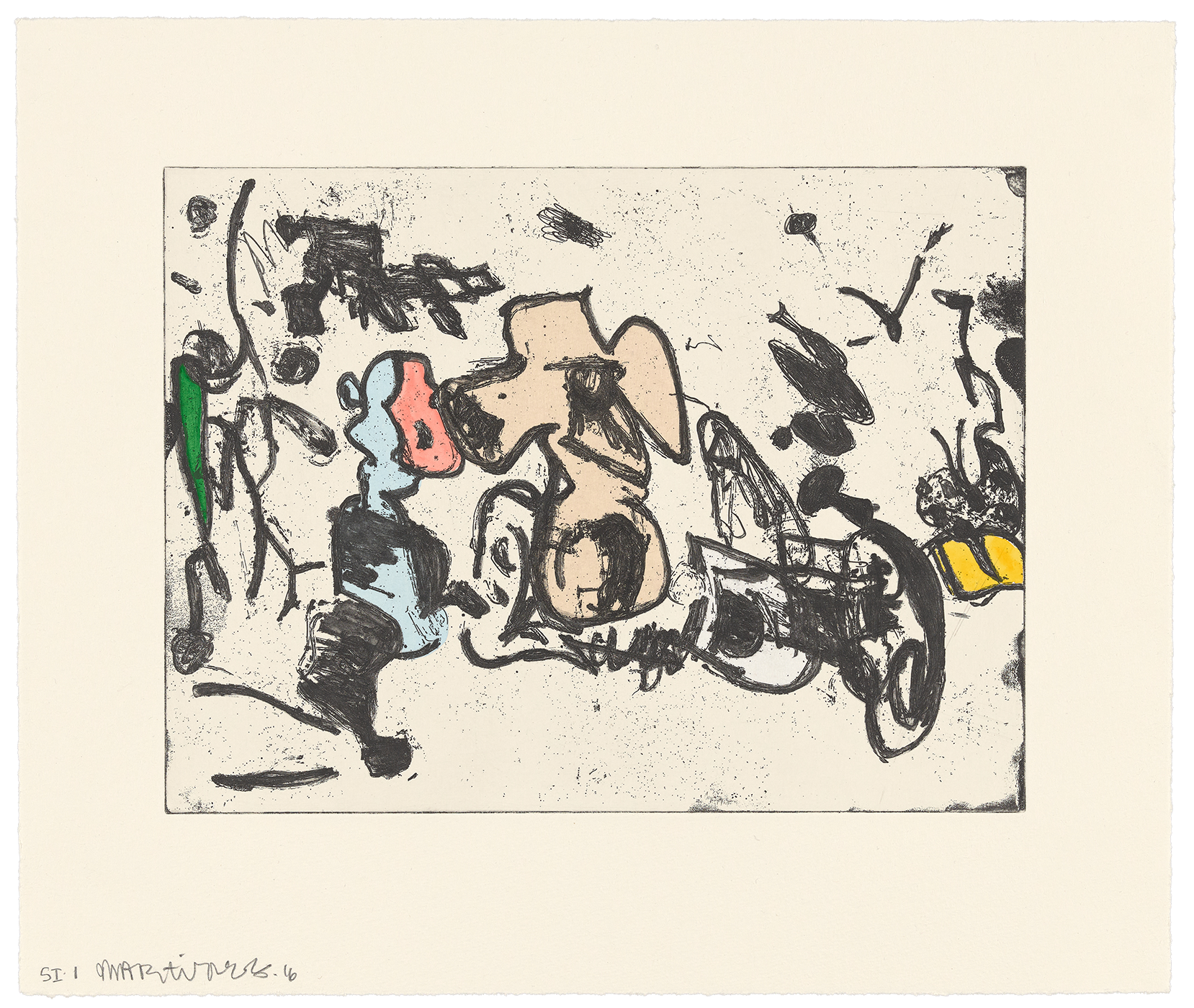
Untitled (2016)
Eddie Martinez Flying Horse Editions
Why This Random Armorer Actually Matters
Here’s the part that gets overlooked: Hopfer didn’t just invent a technique, he invented a business. Recent scholarship credits him with “single-handedly establishing the salability of etchings” and introducing the print publisher business model. In other words, he didn’t just figure out how to make an etching – he figured out how to sell one, turning what had been a niche armorer’s trick into a commercially viable art form that could reach ordinary buyers, not just the aristocracy commissioning decorated armor.
That’s a bigger deal than it sounds. Printmaking’s whole appeal was that it was reproducible and affordable – Hopfer essentially proved etchings could hold their own in a market already dominated by woodcuts and engravings.
The Legacy: From Armor Plate to Rembrandt
Once etching escaped the armory, there was no putting it back. The technique moved from the workshop of an armor decorator into the studios of printmakers and painters, and within a century it would become one of the defining media of Western art – the very technique Rembrandt would later use to create some of the most psychologically penetrating prints in history.
So the next time you admire the loose, sketchy, almost handwritten quality of an etched line – the thing that makes etching feel so different from the crisp precision of engraving – remember it started with a guy in Augsburg who just wanted a knight’s breastplate to look good, and realized, almost as an afterthought, that the same trick could make pictures too.
Sometimes the biggest revolutions in art don’t start with an artist chasing a vision. They start with a craftsman solving a completely different problem — and noticing something extraordinary on the way.