For most of the medieval period, images existed in service of the sacred. A carved altarpiece, an illuminated manuscript, a devotional woodcut of the Virgin – these were instruments of worship, aids to contemplation, vehicles for grace. Their value was spiritual and functional. The idea that an image might be collected, studied, and treasured purely for its artistic and intellectual merit was largely foreign to the medieval mind. It took the radical reorientation of European thought we call Humanism to change that – and nowhere was this change more consequential, or more surprising, than in the collecting of prints.
The Italian Renaissance had already established the principle that art was not merely craft but a liberal intellectual pursuit. Leon Battista Alberti, writing in the 1430s, elevated the painter to the status of philosopher. Giorgio Vasari, a century later, would enshrine the idea that art had a history – that it progressed, that individual genius mattered, that works deserved to be studied and ranked. But it was north of the Alps, in the bustling mercantile cities of Germany, Flanders, and the Netherlands, that these ideas fused most productively with the new technology of printmaking to produce something genuinely novel: the systematic, passionate, intellectually motivated collection of prints as autonomous works of art.
A New Kind of Person Enters the Room
The humanist collector was unlike any cultural figure who had come before. He – and occasionally she – was typically wealthy but not necessarily aristocratic: a merchant, a lawyer, a physician, a scholar, a senior churchman. He was literate in Latin, conversant with classical antiquity, and deeply interested in the new learning flowing from Italian universities and publishing houses. He collected books, coins, medals, ancient gems, natural curiosities, and small bronzes in what contemporaries called a Kunstkammer or studiolo – a private room of wonders that was simultaneously a library, a laboratory of ideas, and a theatre of personal identity. Into this space, prints fitted with remarkable ease and elegance.
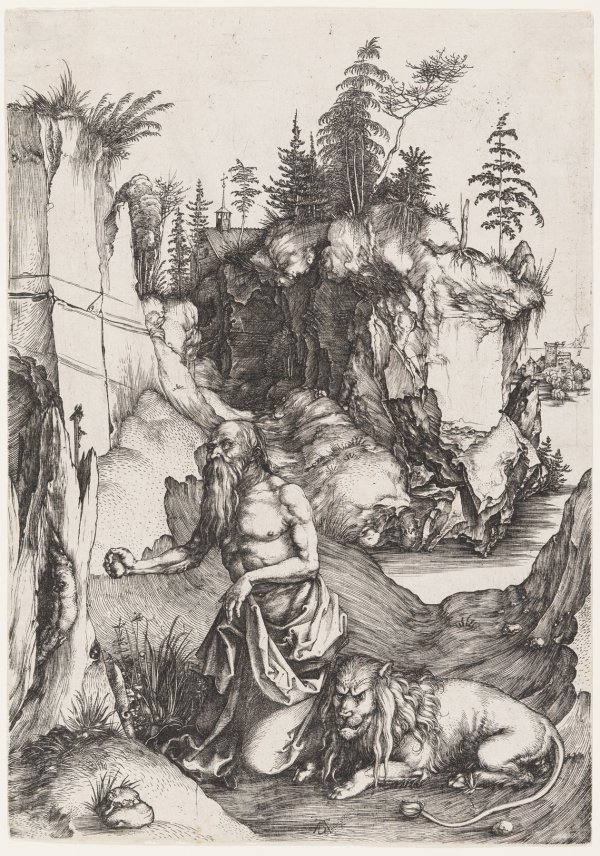
St. Jerome Penitent In The Wilderness (1496), Albrecht Dürer, Christopher-Clark Fine Art
You Could Hold It in Your Hand
What made prints so appealing to this milieu? First and most simply: their scale and intimacy. A print could be held in the hand, turned in the light, examined closely. It rewarded the kind of slow, attentive, learned looking that humanist culture prized. The fine hatching of a Dürer engraving – the way he built shadow and volume through disciplined networks of line – demanded the same quality of attention one might give to a classical epigram or a medallic portrait. These were objects that spoke to the educated eye, quietly and directly, without the grandeur or distance of a painted altarpiece.
Knowing the Difference Was the Point
Prints were reproducible – but they were not identical. A collector who understood the medium knew that early impressions pulled from a fresh copper plate were sharper, richer, and more nuanced than later ones. This introduced connoisseurship – the pleasure of discrimination, of knowing the difference between a first state and a third, between a clean impression and a worn one. Connoisseurship was itself a humanist virtue: it implied learning, taste, and refined judgment. To collect prints well was to demonstrate intellectual seriousness. The collector who could identify a superior impression was performing the same act of discernment as the scholar who could date a Latin manuscript by its hand.
Genius Without a Passport
Perhaps the most radical thing prints offered the humanist collector was access to artistic genius across geography. A Florentine merchant who had never visited Nuremberg could nonetheless possess the hand – the very artistic thinking – of Albrecht Dürer. Before printmaking, genius was pinned to specific locations: you had to travel to see Raphael’s frescoes or Van Eyck’s altarpieces. Prints dissolved this tyranny of place. They created a pan-European art market of ideas, and humanist collectors were its most avid participants. Vasari himself, writing in Florence, had clearly studied Dürer’s prints with deep admiration – they being the only form in which the German master’s work was accessible to him.
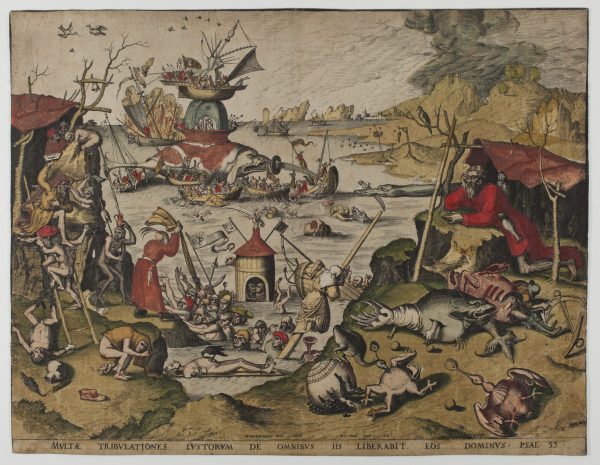
The Temptation of St. Anthony (1561), Hieronymus Bosch, Sarah Sauvin
Dürer’s Most Important Friend
The collector who best embodied this new sensibility was Willibald Pirckheimer, the Nuremberg humanist and close friend of Dürer. Pirckheimer corresponded with Erasmus, translated Greek texts into Latin, and maintained a magnificent library. His collection of Dürer’s prints was not a set of pious aids but a scholarly archive – objects to be discussed, lent to friends, referenced in learned conversation. Dürer himself understood this dynamic and cultivated it deliberately. He sent prints as diplomatic gifts to humanist contacts across Europe, knowing they would be received as tokens of intellectual friendship, not mere commodities. The print, in this world, was currency of a higher kind.
The Habit That Built the Museum
This shift had consequences that echo to the present day. By treating prints as art objects worthy of study and preservation, humanist collectors effectively invented the discipline of print connoisseurship and laid the groundwork for the great print rooms of European museums. The collections assembled by figures like Giorgio Vasari, the Emperor Rudolf II, and later Samuel Pepys and Hans Sloane drew directly on this tradition. When the British Museum opened its print collection to scholars, it was honouring an intellectual habit that stretched back to the studioli of fifteenth-century Nuremberg and Florence.
The copper plate, in humanist hands, became a philosophical instrument – proof that the life of the mind and the pleasures of the eye were not merely compatible, but inseparable.