
The Many Lives of a Single Image: Why Artists Release Prints in Different States
Walk into any serious print room and you’ll eventually hear a curator murmur something like, ‘this is a fine impression of the third state.’ To the uninitiated, it sounds like connoisseurship for its own sake. In truth, it points to one of the most fascinating quirks of printmaking as a medium: unlike a painting, which exists as a single fixed object, a print can exist as several genuinely different works, all born from the same matrix. These are called states, and understanding why they exist opens a window into how artists actually think, revise, and experiment.
What a ‘State’ Actually Is
A state is a distinct version of a print that results from a change made to the printing matrix – the copper plate, wood block, lithographic stone, or screen – between print runs. Add a line, and you have a new state. Burnish out a shadow, deepen a contour, letter in a title, and each of those interventions can create a new, catalogued version. Crucially, a state is not the same thing as an edition. An edition is a run of identical impressions pulled from one unchanged matrix; a state is what you get when the matrix itself is altered partway through a plate’s working life.
This means that two impressions of ‘the same’ print can look meaningfully different – different values, different details, even different compositions – while still being, technically, the same print in the artist’s and cataloguer’s eyes. A cataloguer might describe an image as existing in ‘state II of IV,’ meaning it is the second of four documented versions of that plate, and specialists will often go further, subdividing states into ‘a’ and ‘b’ variants when a change is too minor to warrant a full new number but too significant to ignore.
It’s worth pausing on how counterintuitive this is compared to almost any other art form. A novelist’s drafts are private history, destroyed or archived, rarely sold as finished works in their own right. A sculptor’s maquette is a study, understood as preparatory rather than final. But a print’s second or third state is not automatically a ‘lesser’ draft – it can be exhibited, catalogued, and collected with exactly the same seriousness as the very last version the artist ever pulled. The medium simply doesn’t force a single, final, canonical form the way a unique object does. This is, in a sense, printmaking’s built-in transparency: it cannot help but leave a paper trail of its own revisions, because every revision produces an object.
The Plate as a Living Document
Painters can layer, scrape back, and repaint indefinitely on a single canvas, with each change absorbed invisibly into the final surface. A print matrix works differently. Because the plate or block is a physical tool that gets inked and pulled again and again, any change to it is preserved as its own discrete, printable moment. This is what makes prints unusual among art objects: the working process itself becomes documentable and collectible, frozen at whatever point the artist chose to pull a fresh proof.
Rembrandt is the classic case. His etching plates were reworked obsessively over years – sometimes decades – as he added drypoint burr, deepened tone, or changed a figure’s pose entirely. Scholars have identified as many as ten or more states for some of his plates, and each represents a genuine artistic decision captured mid-thought, the print-room equivalent of an underdrawing revealed by X-ray. His famous etching known as ‘The Hundred Guilder Print’ survives in states that show him softening the plate’s contrasts and reworking passages of shadow over an extended period, evidence of a mind still wrestling with the image long after most artists would have called it finished.
This kind of layered reworking isn’t limited to etching. Woodcut and wood-engraving blocks can be recut, with sections gouged out and replaced or added to entirely. Lithographic stones can be reground and redrawn, or have passages scraped back and reworked with fresh crayon. Even in twentieth-century screenprinting, where a ‘matrix’ is a stencil rather than a solid plate, artists have altered screens between pulls to shift colour relationships or sharpen registration. The specific technology changes, but the underlying principle stays constant: whatever tool makes the mark can, in most printmaking processes, be returned to and altered, and each alteration becomes its own recorded moment.
This is part of why print scholarship reads so differently from painting scholarship. A conservator examining a canvas often has to use infrared reflectography or X-radiography to uncover a hidden earlier composition beneath the visible surface – the underpainting is destroyed, subsumed, invisible without technical intervention. A print historian, by contrast, can frequently hold the ‘underpainting’ in their hands as an actual object: an early state pulled before the final changes were made, sitting quietly in a museum’s print room, unaltered and available for direct comparison.
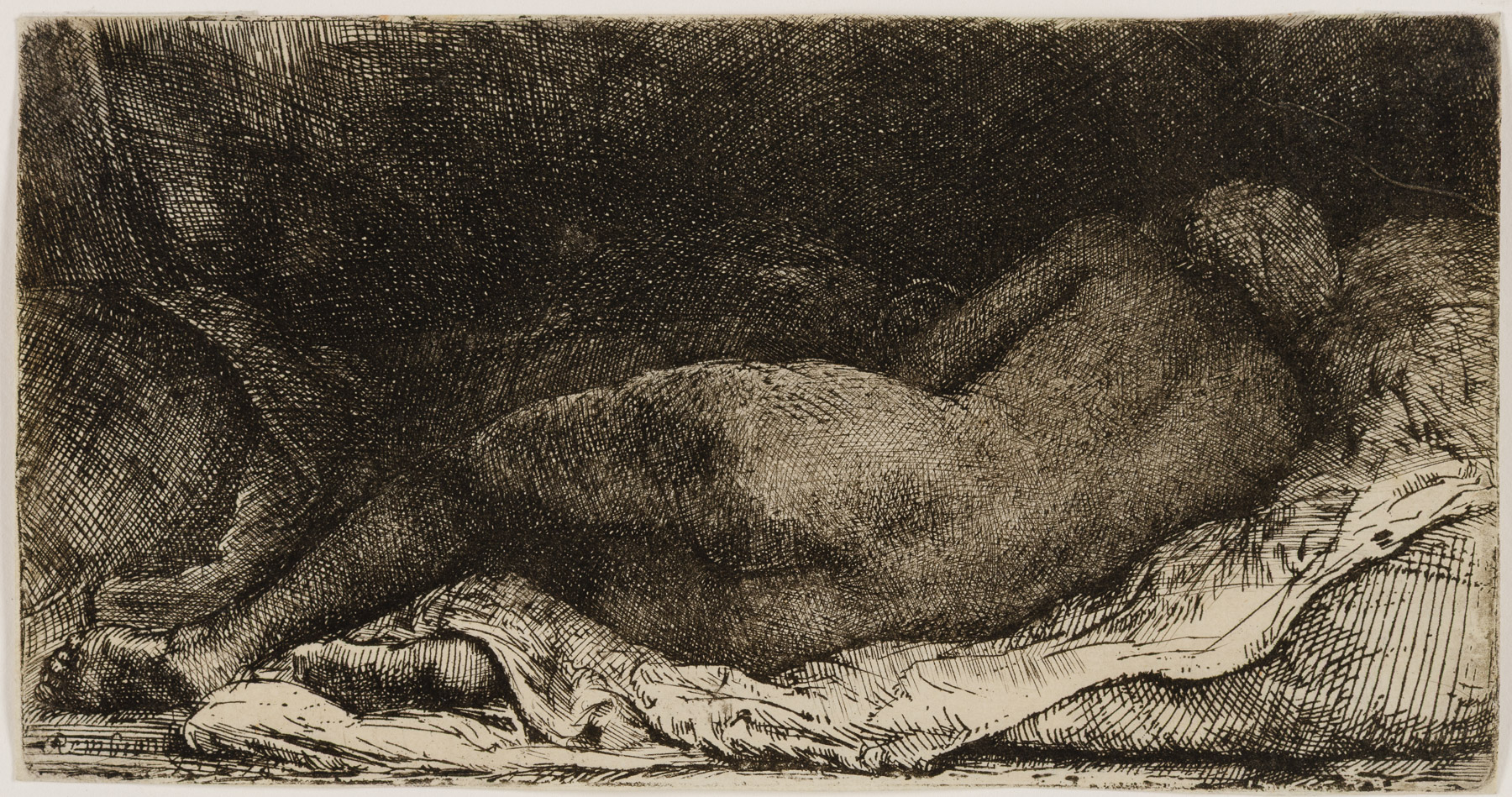
Negress Lying Down, sixth state
Harmensz van Rijn Rembrandt
Christopher-Clark Fine Art
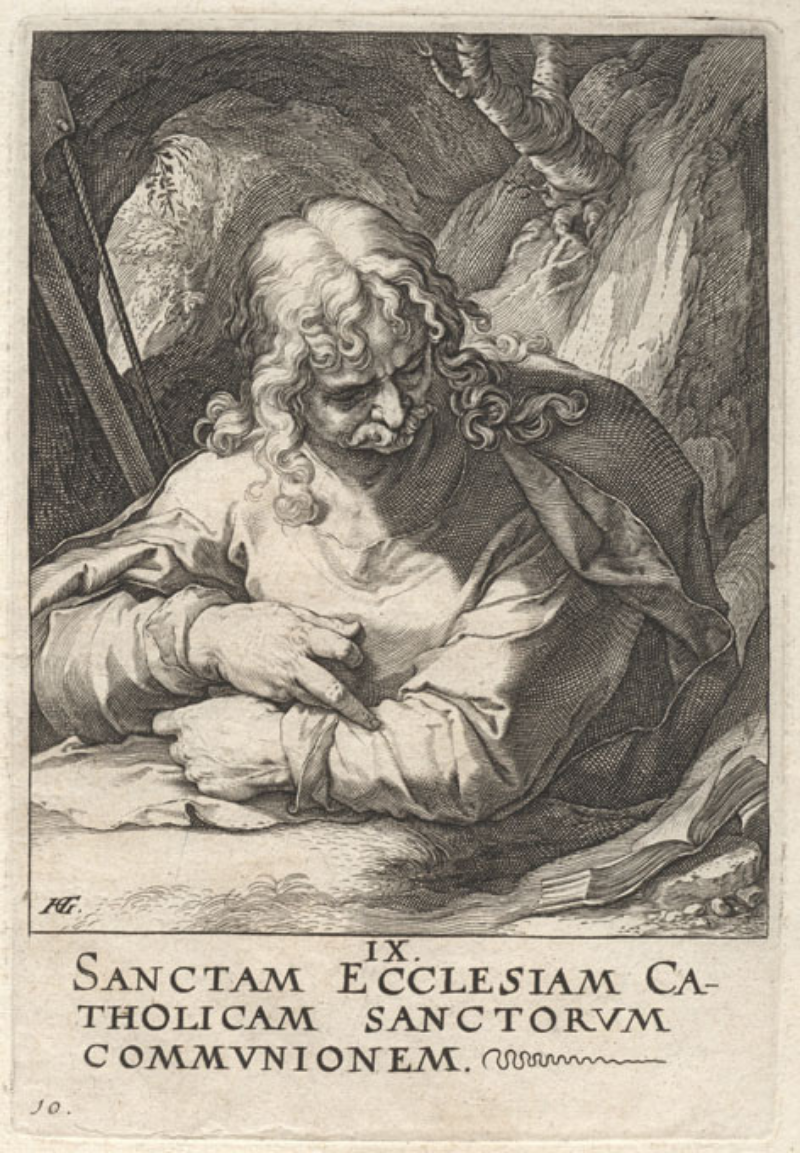
The Apostle James the Lesser, third state
Hendrick Goltzius
Jan Johnson Old Master Modern Prints
Testing an Idea Before Committing
Many states begin life not as public releases but as private proofs – pulled by the artist to check progress. A trial proof lets the printmaker see the image the way an audience eventually will: reversed, translated into ink and paper, revealing whether a passage of shading reads as intended. Seeing a plate in proof often prompts revision. A sky that seemed adequately worked in the metal can look thin once inked; a face can look flat until another layer of cross-hatching gives it weight.
This iterative testing is closer to how a composer might revise a score after a rehearsal than to a painter simply finishing a canvas. The states preserve that dialogue between intention and result – showing us not just the final image but the reasoning that got the artist there.
Some artists formalized this testing process into its own vocabulary. A ‘working proof’ documents a stage still in progress, often annotated in pencil or chalk directly on the sheet with notes to the artist’s own future self: darken here, this line too heavy, add cross-hatching to the collar. Whistler was known for pulling and marking up proofs this way, treating the impression almost as a working drawing rather than a finished object. Degas went further still, sometimes reworking the same plate across a startling number of states – his monotypes and etchings of dancers and bathers show him testing tonal relationships with an almost restless persistence, each pull a fresh attempt at getting the atmosphere right. In cases like these, the proof isn’t a mistake to be corrected and discarded; it’s a genuine record of an artist thinking with the medium itself, using the physical resistance of the plate to sharpen an idea that might otherwise have stayed vague.
Correcting, Refining, and Sometimes Starting Over
Not every state reflects pure creative exploration. Some result from practical corrections: fixing a technical flaw, adjusting a composition that didn’t balance, or removing an element a patron or publisher objected to. Goya’s Los Caprichos and Disasters of War series include states where captions were altered, sometimes for political prudence rather than aesthetics.
Other changes are purely functional. Publishers frequently added inscriptions after an artist’s working states were finished: an engraved title, the names of the printmaker and publisher, dedications, or copyright lines. These ‘letter states’ – before letters, with open letters, with full letters – represent a different kind of revision, driven by commerce and legal necessity rather than artistic intent, but they still create distinguishable, collectible versions of the print.
Occasionally the correction runs in the opposite direction, with a change forced on the artist rather than chosen by them. Figures have been removed from plates at a patron’s request, offending details softened to satisfy a censor, or entire compositions altered after a first impression revealed a legal or diplomatic problem the artist hadn’t anticipated. These states are historically valuable precisely because they weren’t purely aesthetic choices – they’re a record of the pressures, commercial and political, that shaped what an image was allowed to say. A print historian reading across a sequence of states is, in effect, reading a small negotiation between an artist’s intention and the world’s constraints on it.
Reworking Old Plates for New Purposes
States can also appear long after a print’s original creation, when a plate is taken up again – sometimes by a different hand entirely. Publishers reissued popular plates for decades, and each reissue might involve reworking worn lines to keep the image sharp, a process called rebiting or retouching. Copper wears down under the pressure of the press; a plate that has yielded a few hundred crisp impressions can start to print grey and thin, its finest lines flattening out. Rather than retire a commercially successful plate, publishers routinely handed it to a professional retoucher, whose job was simply to restore legibility, not to improve the image artistically.
The results can be jarring to compare side by side. Late states of a heavily reprinted plate often look markedly weaker than early ones: lines softened by wear or clumsily deepened by a hand that isn’t the original artist’s, contours that have lost the specific pressure and rhythm of the person who first cut or bit them. Dürer’s woodcuts, reprinted from blocks that survived for well over a century, show exactly this kind of decline in later editions, the crisp calligraphic energy of the original cutting gradually blunted by wear and by other hands attempting to repair it. Distinguishing an early, artist-supervised state from a later, posthumously reworked one is a core skill of print connoisseurship, and it can mean an enormous difference in value and historical interest – not because the later state is fraudulent, but because it represents craftsmanship once removed from the artist’s own hand and eye.
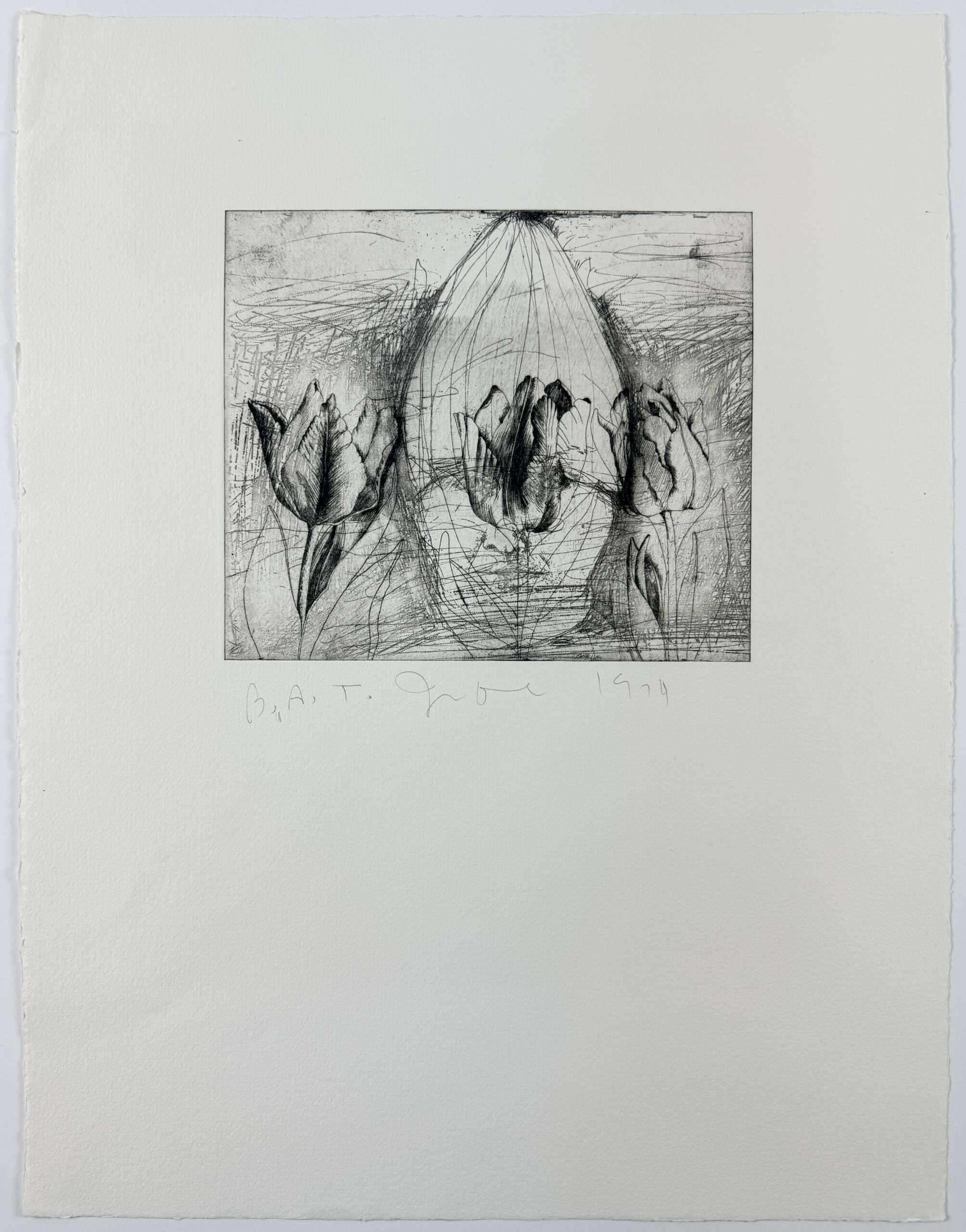
Self Portrait in a Ski Hat (tulips), third state
Jim Dine
Petersburg Press
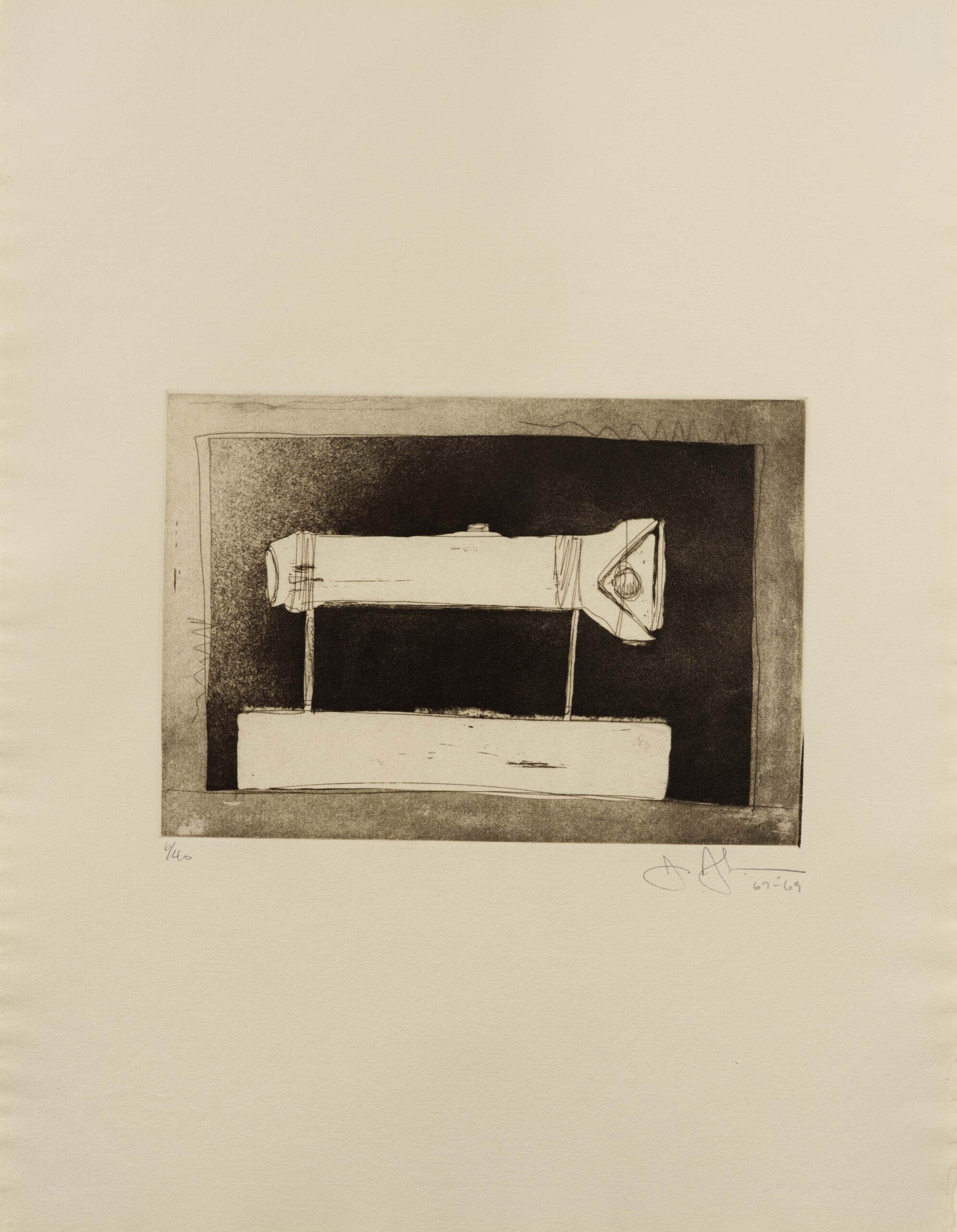
Flashlight (Large), from 1st Etchings, 2nd State
Jasper Johns
Leslie Sacks Gallery
Why Collectors and Historians Obsess Over States
For collectors, the state of an impression can dramatically affect both its meaning and its price. An early state, pulled while the artist was still actively engaged with the plate, is often prized as closer to the moment of creation – sharper lines, more of the artist’s own hand in the ink and wiping. But early states aren’t automatically ‘better’ in aesthetic terms; some artists, Rembrandt again among them, produced their most resolved, atmospheric images only in a later state, after building up tone and texture over multiple reworkings.
For historians, states function almost like a manuscript’s successive drafts. They let us trace an artist’s changing intentions, reconstruct the chronology of a series, and understand how technical constraints (a worn plate, a fragile ground, a printer’s error) shaped final decisions. A catalogue raisonné will typically enumerate every known state of a print in detail, because the differences – however minor they might look to a casual eye – are exactly where the art historical evidence lives.
A Medium Built for Revision
Ultimately, the existence of states reflects something essential about printmaking’s nature: it is a medium of multiples that nonetheless allows for singular, sequential change. No other traditional art form lets us watch an artist think out loud across time, quite literally reprinting their own second thoughts. That’s why, for those who study or collect prints, the state isn’t a footnote to the ‘real’ work – it often is the work, captured in one of its many possible moments of becoming.