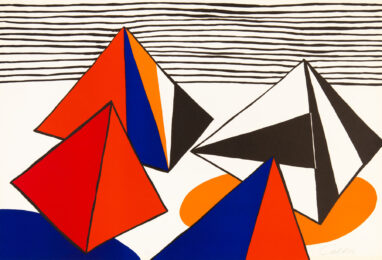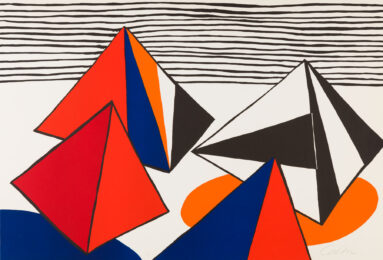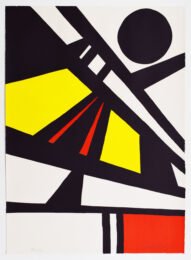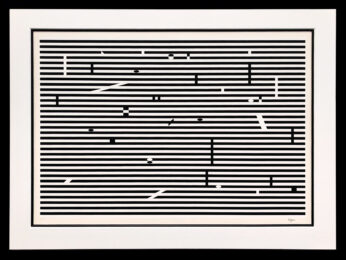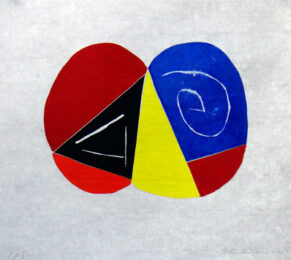
Home > Alexander Calder > GallArt.com > Homage to Euclid (Composition IX)
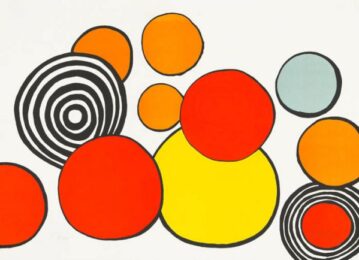
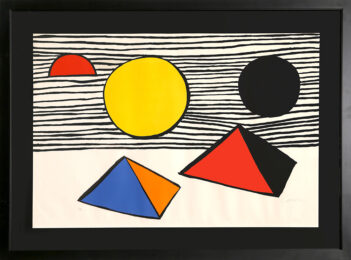
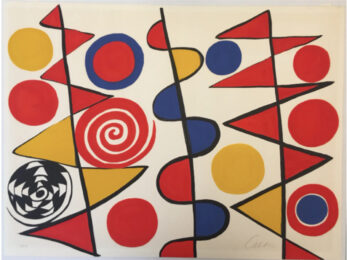
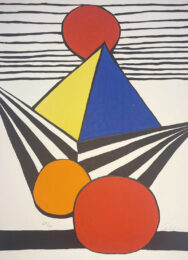
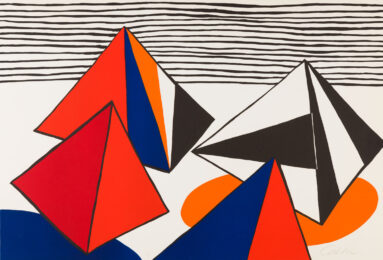
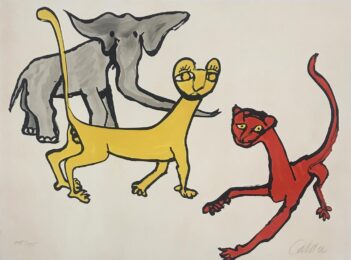
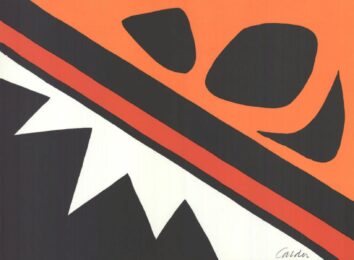
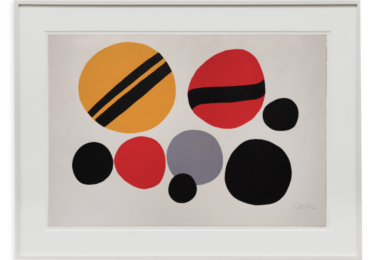
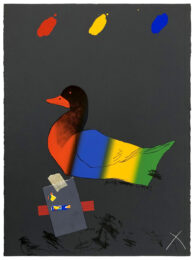
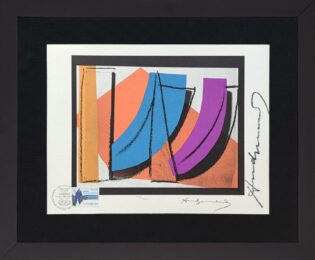
  • Homage to Euclid (Composition IX) by Alexander Calder

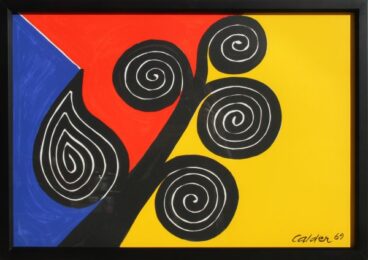
Homage to Euclid (Composition IX) by Alexander Calder

GallArt.com

Colour Lithograph

1976

Edition Size: 100

Sheet Size: 20.5 x 28.25 inches

Signed

Condition: Excellent

Details — Click to read

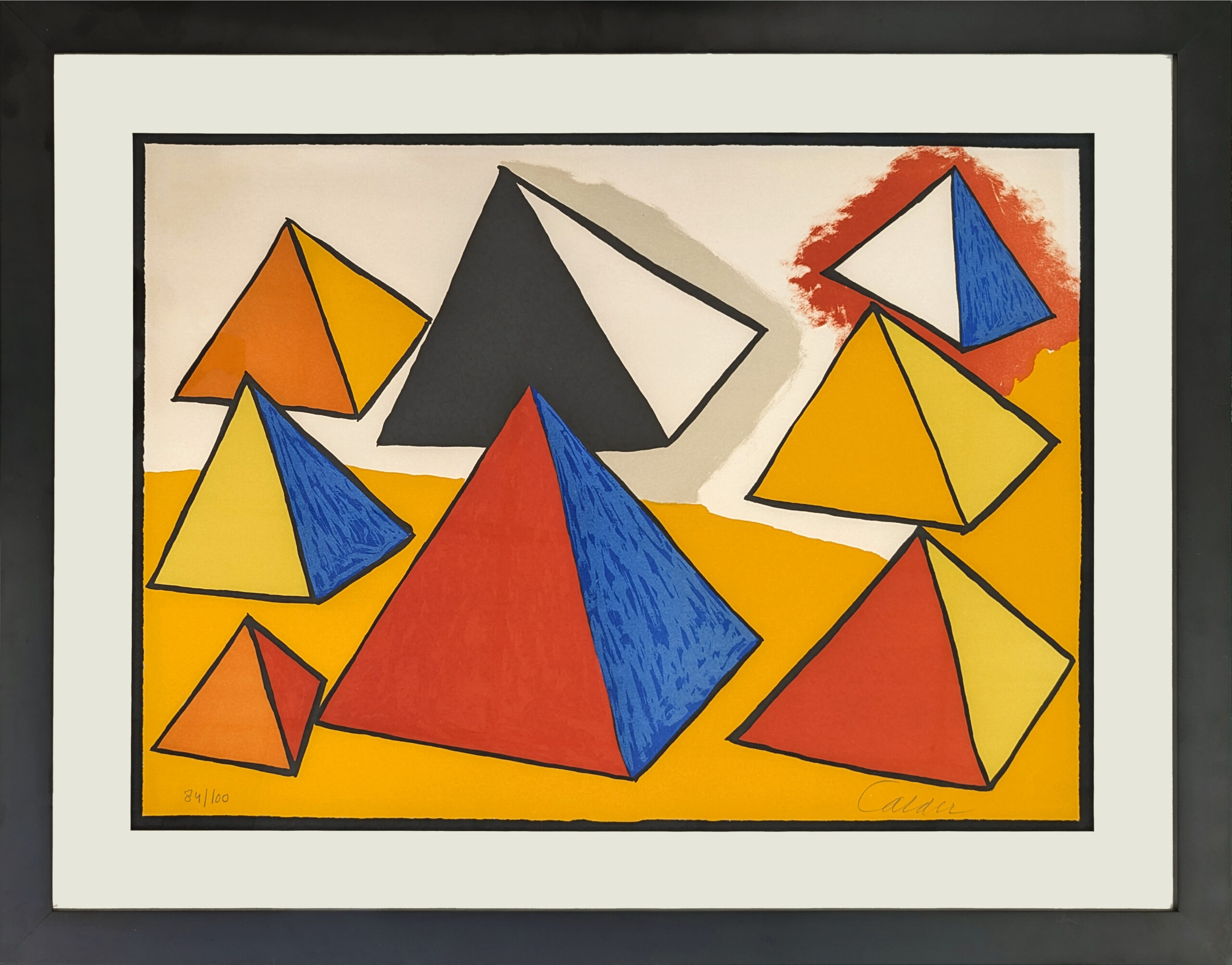
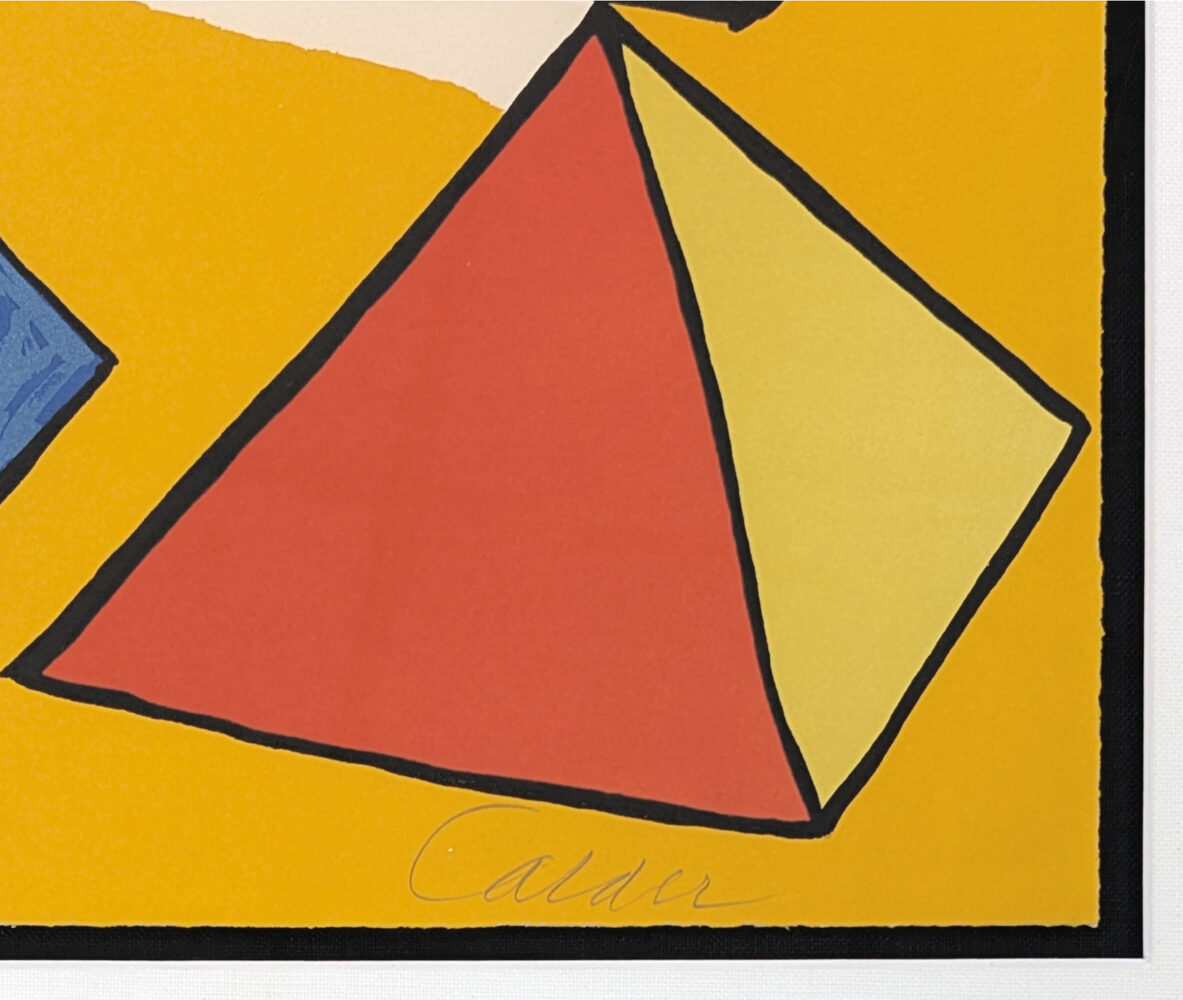
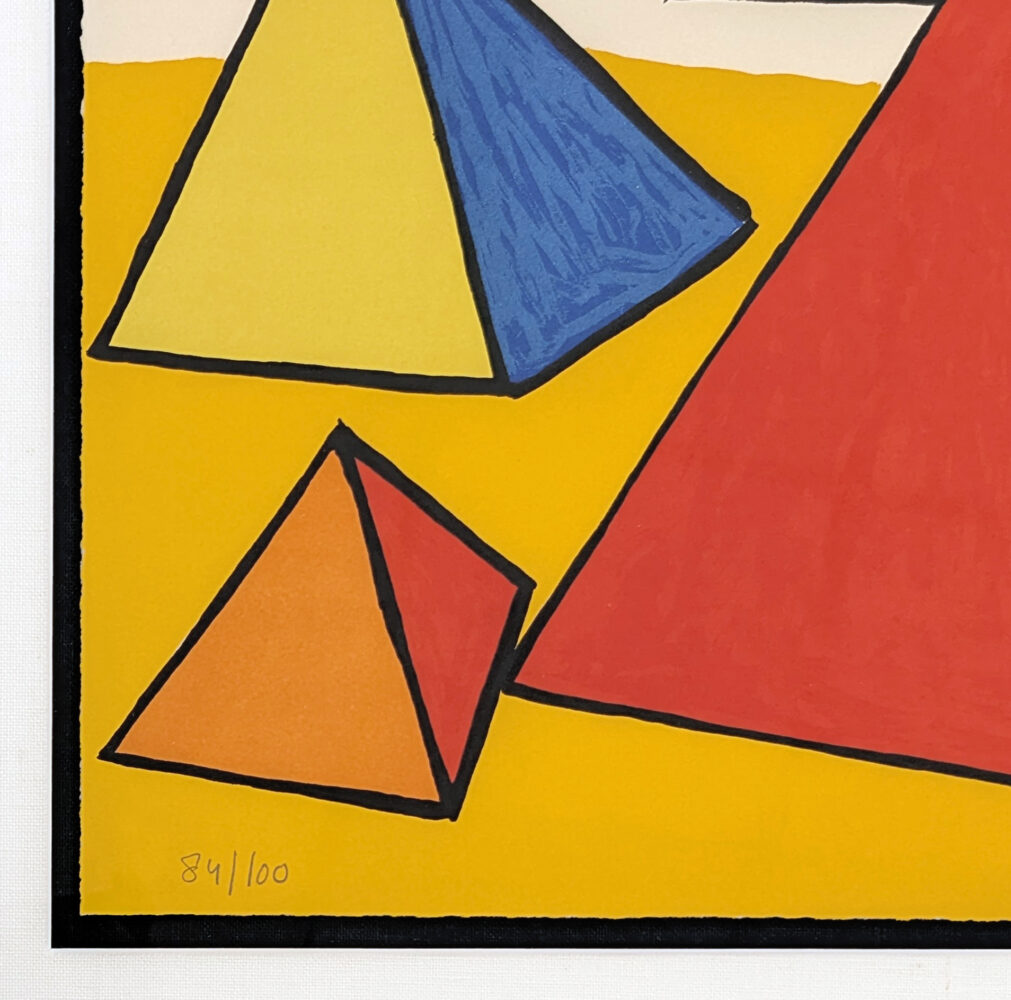
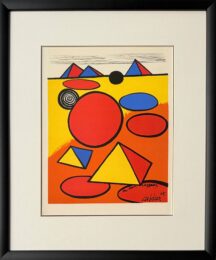
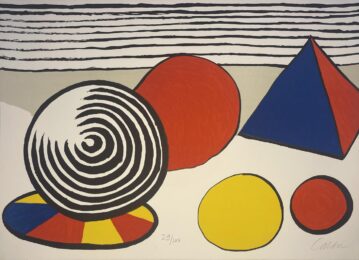
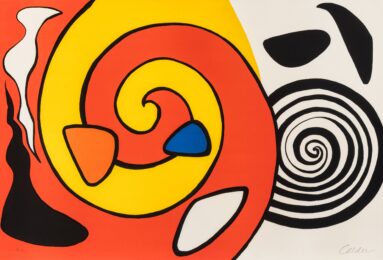
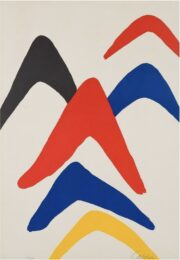
Homage to Euclid (Composition IX) from La Mémoire Élémentaire. Lithograph in colors on Arches paper. Hand signed by Alexander Calder lower right. Hand numbered 84/100 lower left (there was also an edition of 50 in Roman numerals on Japan paper). Published by Éditions de la Différence, Paris. Sheet size: 20.5 x 28.25 inches. Frame size: 29 x 37 inches.

Artwork is in excellent condition.

About the Artist: Alexander Calder was an American artist best known for his invention of the kinetic sculptures known as mobiles. Calder also produced a variety of two-dimensional artworks including lithographs, paintings, and tapestries as seen in his Butterfly (1970). “My whole theory about art is the disparity that exists between form, masses, and movement,” the artist once said. Born on August 22, 1898 in Lawnton, PA, Calder turned to art in the 1920s, studying drawing and painting under George Luks and Boardman Robinson at the Art Students League in New York. Calder moved to Paris to continue his studies in 1926, where he was introduced to the European avant-garde through performances of his Cirque Calder (1926–1931). “I was very fond of the spatial relations,” he said of his interest in the circus. “The whole thing of the—the vast space—I’ve always loved it.” With these performances, along with his wire sculptures, Calder attracted the attention of such notable figures as Marcel Duchamp, Jean Arp, and Fernand Léger. Notably, it was his friend Duchamp that coined the term mobile—a pun in French meaning both “motion” and “motive”—during a visit to Calder’s Paris studio in 1931. His earliest mobiles moved by motors, but Calder soon abandoned these mechanics and designed pieces that moved by air currents or human interaction. Over the course of seven decades, along with his mobiles, he also produced paintings, monumental outdoor sculptures, works on paper, domestic objects, and jewelry. The artist lived in both Roxbury, CT, and Saché, France, before his death on November 11, 1976 in New York, NY. Today, his works are held in the collections of The Museum of Modern Art in New York, the National Gallery of Art in Washington, D.C., the Whitney Museum of American Art, New York, the Art Institute of Chicago, and the Tate Gallery in London.

$10,000.00

Buy direct from the gallery

The Artist

Alexander Calder

Alexander Calder was an American artist best known for his innovative sculptures, often referred to as “mobiles” or “stabile sculptures”. As an accomplished printmaker, Alexander Calder prints are highly sought after by collectors.

Read more

Expand your Alexander Calder search to more galleries

View Artist

Don’t miss out on other artworks at GallArt.com

View Gallery

Related artists to explore