Every great print carries two signatures. One is the artist’s, in pencil, at the bottom of the sheet. The other is easy to miss: a small blind stamp or chop pressed into the paper, often no bigger than a thumbnail. It belongs to the master printer, and for most of history it went unnoticed.
So who first earned that title? And who gets to use it today? The answers are more tangled, and more interesting, than a museum wall label would suggest.
The Trick Question at the Heart of the Title
Nobody can be crowned “the first master printer”, because the phrase has meant different things in different centuries.
The oldest meaning comes from the guild system. A master printer ran a shop, trained apprentices and answered to the trade. In the age of Gutenberg and Aldus Manutius, that meant someone who produced books, and the title described a business role as much as a skill.
Fine art printmaking produced a second meaning: a technician-collaborator who translates an artist’s vision into an edition. That is the sense most art historians have in mind today, and there the story becomes much clearer. It just doesn’t begin where you’d expect.
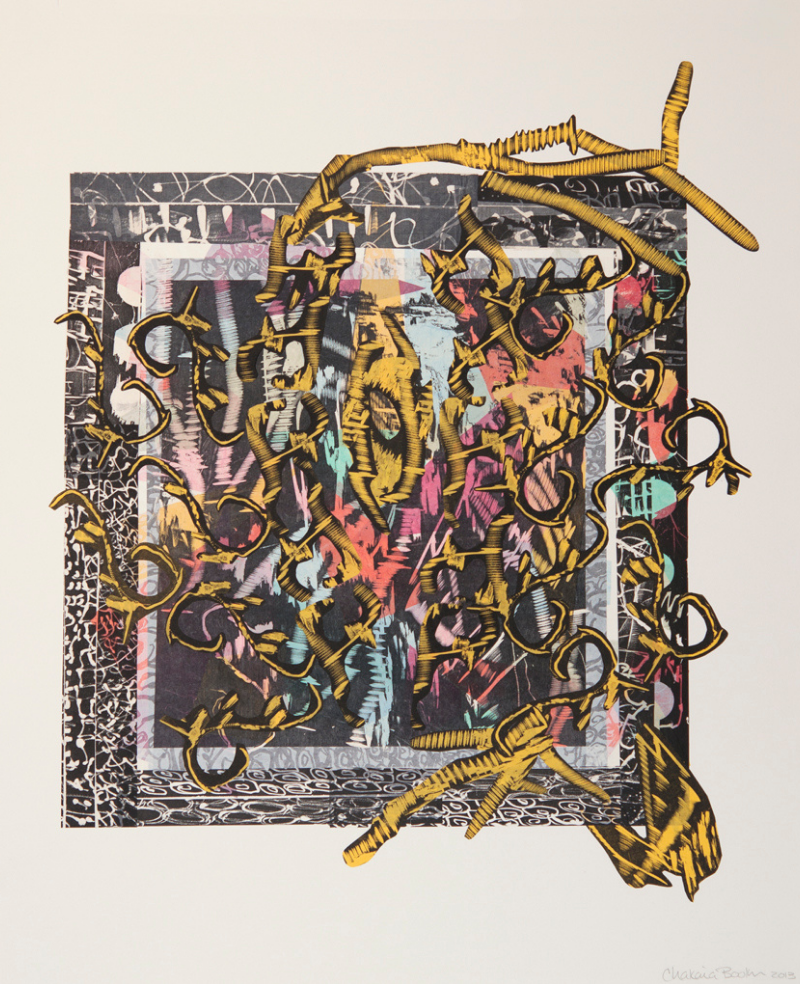
Untitled (2013) Chakaia Booker
PS Marlowe
When Artists Were Their Own Printers
For the first few centuries of European printmaking, the printer was often the artist. Dürer ran a busy workshop where prints were produced under his direction. Rembrandt famously experimented with how he wiped his plates, changing the ink and paper to alter the mood of a single image. In these cases the maker and the printer were the same person, or the printer worked so closely under the artist’s eye that no separate identity emerged.
Elsewhere, printmaking served a different purpose. Engravers reproduced other people’s paintings and designs, and their names sometimes appeared in the margin. But they were interpreters of an image rather than collaborators on an original one, so they sit somewhat outside our story.
Nothing in this world resembled the modern master printer: a specialist, working as an equal partner, whose technical judgment shapes the finished artwork.
A Stone, a Grease Pencil and a Bavarian Inventor
That changed with a chemical accident of genius. In the late 1790s, Alois Senefelder invented lithography, a process built on a simple fact: grease and water repel each other. An artist draws on a flat limestone with a greasy crayon, the surface is chemically treated, and ink sticks only to the drawn marks.
It sounds easy. It isn’t. Lithography demands an obsessive balance of acid, gum arabic, water, ink and pressure, and a tiny error can ruin a stone hours into a session. The artist wanted to draw, and someone else had to master the chemistry. Almost overnight, a new kind of expert was needed.
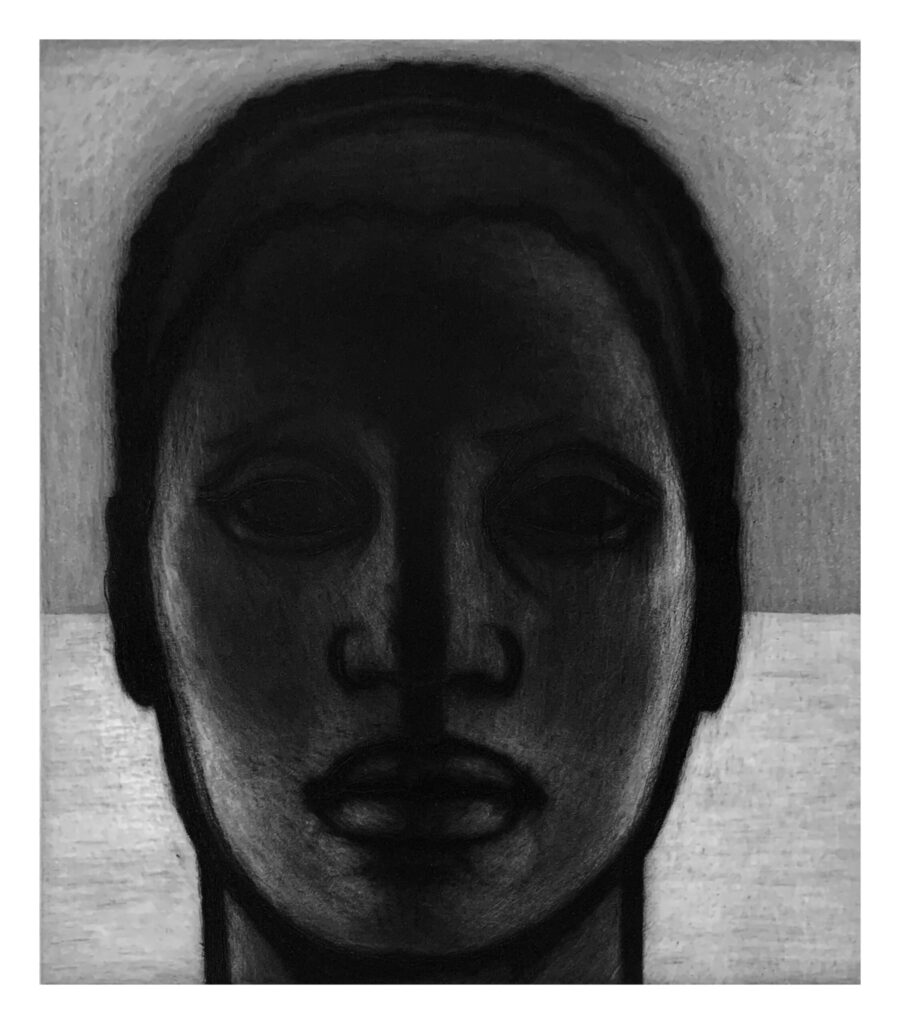
Head of Woman (2004) John Wilson
Center Street Studio
Paris Takes the Crown
By the 19th and early 20th centuries, Paris had become the capital of collaborative printing. Fernand Mourlot’s studio became legendary for lithographs by Picasso, Matisse and Miró. Georges Lacourière’s workshop played a similar role for intaglio, working with artists who wanted the depth of etching without wrestling with the plate.
These printers were revered, and artists valued them. Yet their status was informal. They earned respect through results rather than any official title, and their names often faded behind the famous ones on the sheet. The craft was thriving, but the recognition wasn’t.
Enter Tamarind: The Title Gets a Blueprint
The most defensible answer to “first master printer” arrives in 1960s Los Angeles. June Wayne, frustrated that she had to travel to Paris to get her lithographs printed properly, secured funding to start the Tamarind Lithography Workshop. She invited Garo Antreasian to serve as its first technical director and master printer.
Tamarind’s ambition went well beyond running a shop. American artists at the time tended to favour more direct methods, and there was no print shop dedicated to serving them. Tamarind set out to change that, and its research led to practical breakthroughs that are now standard across the field. These included lightfast inks, more reliable paper, precise registration systems and aluminium plate printing.
Just as important, Tamarind changed the etiquette of credit. It established the practice of recording every edition in detail and of stamping each impression with both a workshop chop and a printer’s chop, acknowledging the printer’s role. The printer was no longer an anonymous pair of hands. They were part of the record.
Crucially, Tamarind also built a training programme. That is why many historians treat it as the moment “master printer” became a formal, teachable, credentialed path rather than a vague compliment.
A Legacy That Spread Around the World
The graduates carried the system with them. John Dowell Jr. completed his training at Tamarind in 1966 and is recognised as its first Black master printer. Others, such as Ken Tyler, who worked at Tamarind before founding Gemini G.E.L. in Los Angeles, built celebrated workshops of their own. Tamarind still describes its primary mission as training master printers, and its alumni have gone on to establish workshops across the globe. More recently, Tamarind Master Printer Frank Janzen was appointed the first Master Printer at Crow’s Shadow Institute of the Arts in Pendleton, Oregon, which shows how far the model has travelled.
Tamarind wasn’t alone in this movement. In New York, Robert Blackburn’s Printmaking Workshop opened its doors in 1948 and became a vital space for artists, especially artists of colour, who lacked access to professional facilities. Tatyana Grosman’s Universal Limited Art Editions, founded in the late 1950s, drew painters like Jasper Johns and Robert Rauschenberg into lithography. Together these workshops built the collaborative culture we now take for granted.
So Who Can Actually Call Themselves a Master Printer?
Here’s the surprising part: the title isn’t legally protected. Unlike the German Meister system, which has formal, regulated qualifications, “master printer” in the art world has no universal governing body. There is no exam that the whole profession agrees on and no licence to display. In practice, the title is earned in three overlapping ways.
1. Formal certification. The clearest route is a credential such as the Tamarind Master Printer Certificate. It’s demanding, and holders often go on to leadership roles. Valpuri Remling, for instance, received her certificate in 2009 and was later appointed Master Printer and Workshop Manager at Tamarind itself.
2. Apprenticeship and lineage. Many respected masters trained under other masters in professional workshops, with no certificate at all. In print circles, who taught you and whom you’ve worked for carry real weight, much as they do in a chef’s or a violin-maker’s career.
3. Reputation and a body of work. Ultimately the title is validated by the people who depend on it: artists, publishers, curators and collectors. A master printer is someone who can proof a plate, solve a technical crisis late at night, and deliver an edition of seventy-five identical impressions that still captures the spirit of the artist’s original gesture. That takes years, and there are no shortcuts.
The Unwritten Rule
If the profession has an etiquette, it’s this: you don’t crown yourself. The title is usually conferred by peers, teachers or the artists who trusted you with their work. Someone who has printed a handful of editions is a printer, and there is nothing shameful in that. Someone with decades of collaborations, a mastery of several techniques and a chop that collectors recognise has earned something more, certificate or not.
That’s also why, when someone introduces themselves as a master printer, a good follow-up question is simply: where did you learn, and who have you printed for? A genuine master will answer happily and at length.
Look Closer Next Time
The next time you’re in a museum print room, don’t stop at the artist’s name. Look for the second mark, the small stamp near the margin. It signals a partnership between the person who imagined the image and the person who made it real, over and over, without losing a whisper of its nuance.
That hidden collaborator has a long history, from Senefelder’s Bavaria to the Paris ateliers to the workshops of Los Angeles and Albuquerque. And after two centuries in the shadows, they are finally getting their credit.