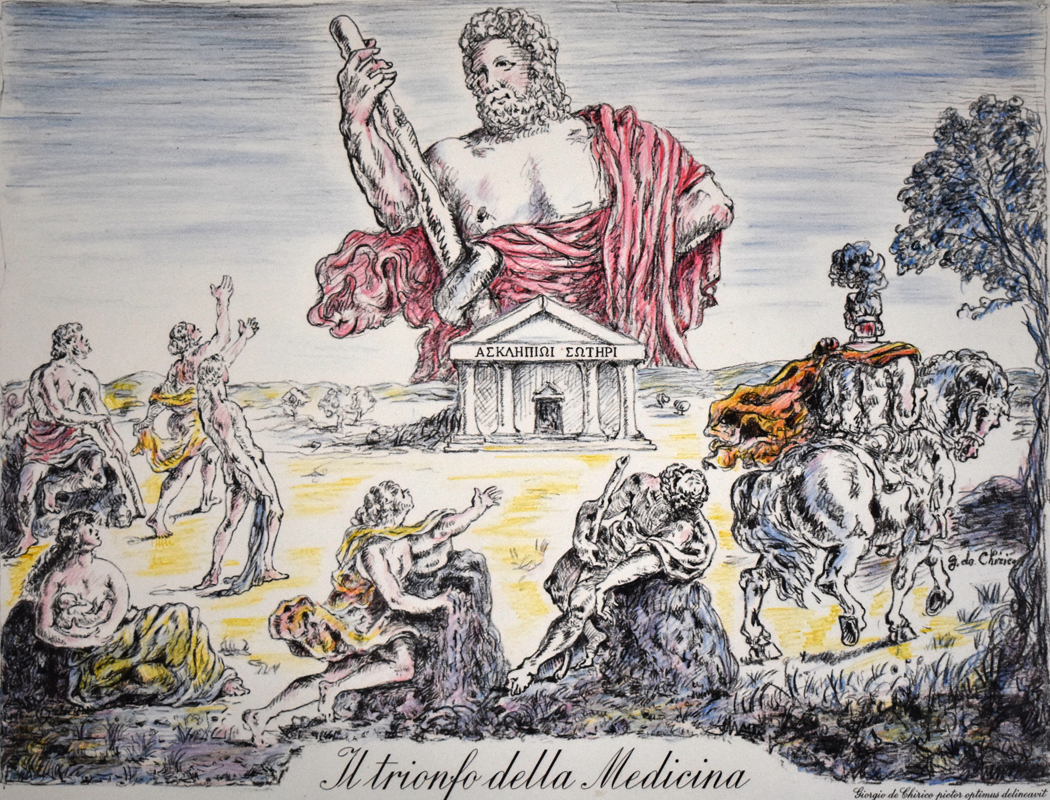


The Triumph of Medicine | Il trionfo della medicina
Artwork details
- Artist
- Giorgio De Chirico
- Title
- The Triumph of Medicine | Il trionfo della medicina
- Description
-
GIORGIO DE CHIRICO 1888-1978
Vólos, Greece 1888 - 1978 Rome (Italian)
Title: The Triumph of Medicine | Il trionfo della medicina, 1953
Technique: Original Hand Signed and Numbered Lithograph in Colours on Wove Paper
Paper size: 51 x 68 cm. / 20 x 26.7 in.
Additional Information: This original lithograph in colours is hand signed in pencil by the artist "G. de Chirico" at the lower right. The work is numbered in pencil from the edition of 99, at the lower left margin. It was published by Carlo Bestetti Edizioni d'arte, Rome in 1953. The paper bears the publisher’s blindstamp.
Literature: Brandani, E. (1999). Catalogo dell'opera grafica1969-1977. Volume II. Bologna: Bora.
Reference: Brandani 136
Condition: Very good condition. Minor handling creases and nicks along the sheet edges.
- Date
- 1953
- Medium
- Lithograph
- Edition
- 99
- Signature
- Signed
- Sheet
- 51 x 68 cm. cm
- Status
- Available
- Price
- $2,200.00