
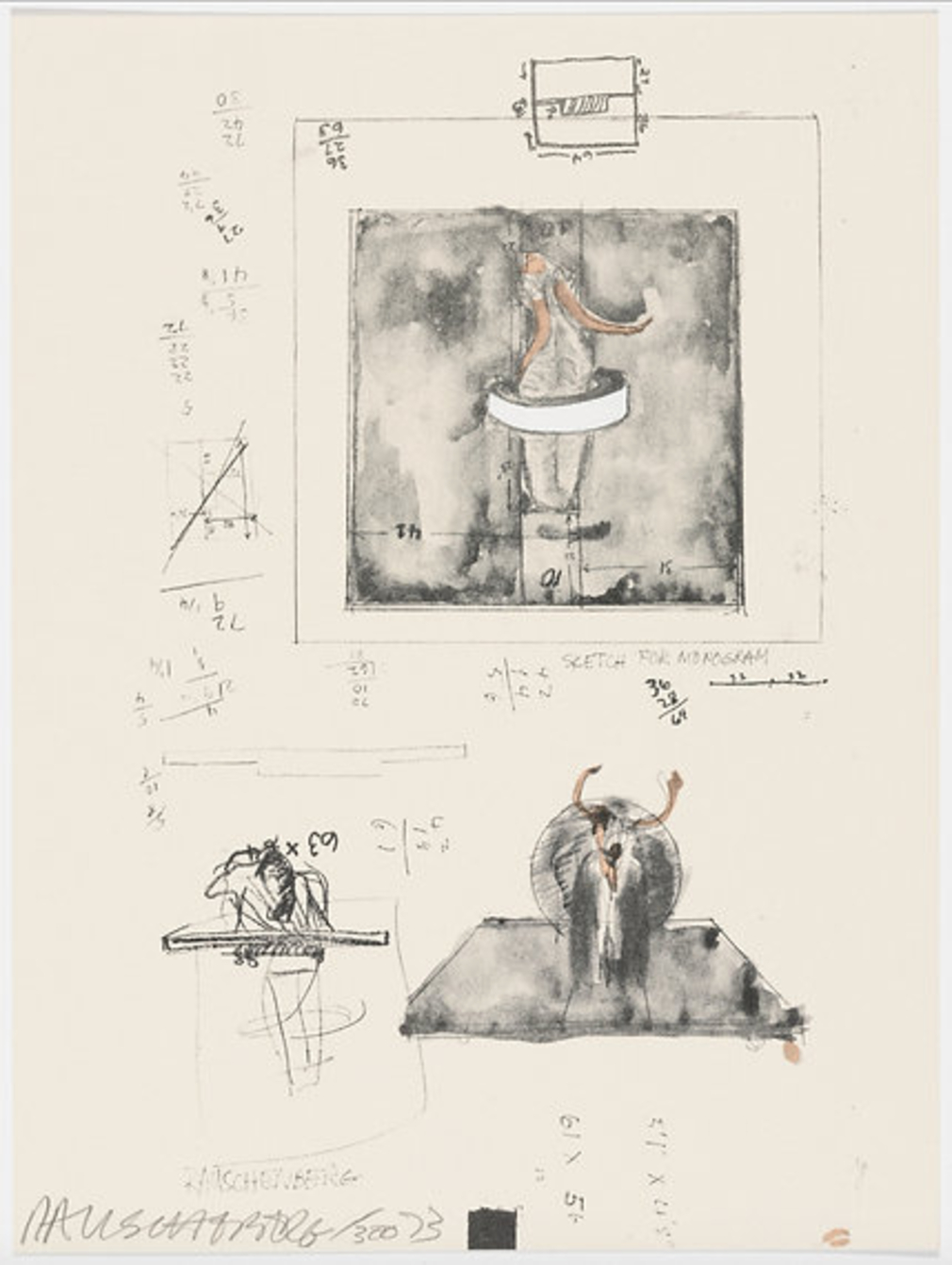
Robert Rauschenberg Untitled (Sketch for Monogram) from The New York Collection
Artwork details
- Artist
- Robert Rauschenberg
- Title
- Robert Rauschenberg Untitled (Sketch for Monogram) from The New York Collection
- Description
-
Untitled (Sketch for Monogram) from The New York Collection
By Robert Rauschenberg
Lithograph from a portfolio of seventeen screenprints, nine lithographs, two lithographs with screenprint, one photocopy, and one photograph.
1973
30.4 x 22.9 cm
Hand-signed and numbered by Rauschenberg
Edition of 300
From The New York Collection for Stockholm
Published by Experiments in Art and Technology, Inc., New YorkMint condition, housed within the original typeset paper folder from the portfolio.
This screenprint on paper was created as part of the iconic New York Collection for Stockholm portfolio, a collection of 30 prints designed to be sold in an edition of 300, with each artist donating their prints. Experiments in Art and Technology in New York arranged the portfolio of prints to be sold to raise money for the collection at Moderna Museet in Stockholm, a European museum that celebrated American artists.
Today, important museums around the world hold the Stockholm portfolio including the MET and MoMA in New York, the Georgia Museum of Art, the Chazen Museum of Art and the Mildred Lane Kemper Art Museum, along with many others.
- Date
- 1973
- Medium
- Lithograph
- Edition
- 300
- Signature
- Signed
- Sheet
- 30.4 x 22.9 cm
- Status
- Sold


